Catalogue No. 07
Does the colour have an effect? A myth put to the test
Blue calms, pink activates: you read this a lot. One study tested exactly that.
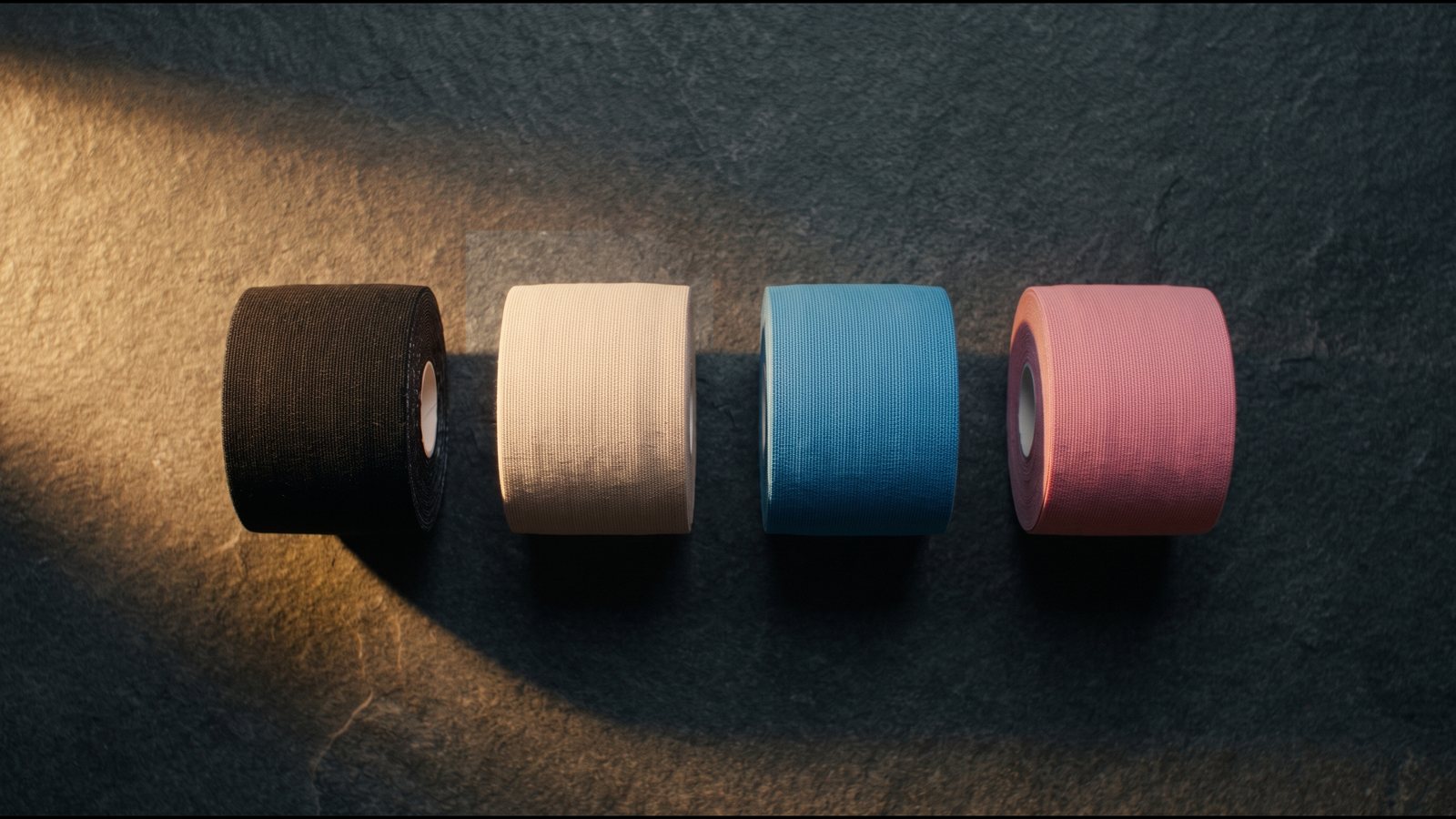
Anyone buying tape soon comes across colour promises: some colours are supposed to calm, others to activate. Sounds nice. But is it true?
What was tested
A research team from Australia examined the question in a randomised trial in 2018. 32 healthy adults went through five conditions: no tape, beige tape with tension, beige tape without tension, red tape with tension and blue tape with tension. The team measured hop performance, thigh strength and the activity of the nerve pathways to the muscle.1
The result
The colour of the tape had no influence on performance, strength or nerve activity. To be honest, it is also true that the tape as a whole did not change these values in the healthy participants.12
The limits of the study
The study looked at healthy adults in single sessions. It says little about people with complaints. But there is no other evidence either that colour has an effect.
Why there are still four colours
- Black: for everyone who likes it simple.
- Beige: discreet on the skin.
- Blue and pink: for teams, club colours and a good mood.
All four colours have the same material, the same adhesive and the same strips. The colour is a matter of taste, nothing more.
This text is for general information. It does not replace medical or physiotherapy advice.
Sources
Enquiry
Tell us what you need.
More from the catalogue
The depot: how to store tape properly
Heat, moisture and sunlight are the enemies of every adhesive. How to keep your tape fresh down to the last strip.

Rayon or cotton: what a tape made of artificial silk does differently
Classic kinesiology tape is made of cotton. Ours is 96% rayon. What this fibre is, what it can do and where its limits are.
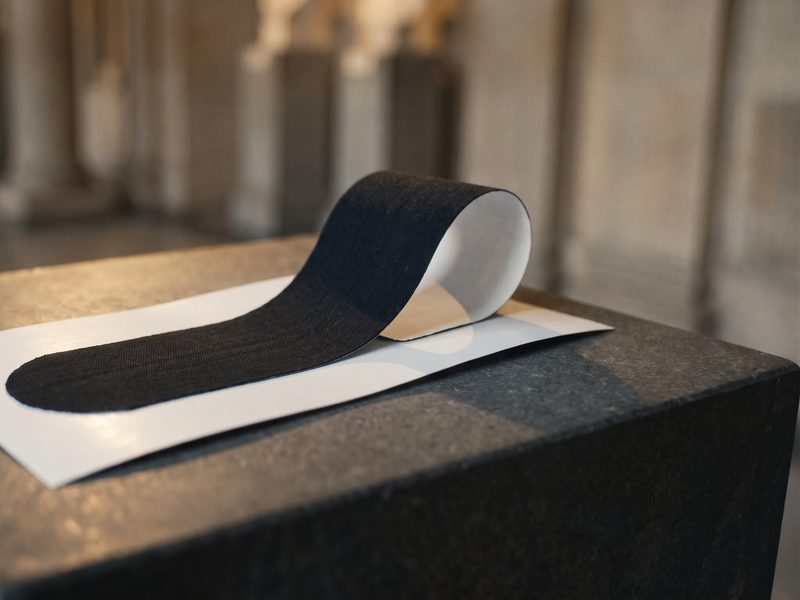
The ends without tension: how to apply a strip properly
Prepare, apply, activate, remove. A guide in four steps and the mistakes that happen most often.