Catalogue No. 01
Rayon or cotton: what a tape made of artificial silk does differently
Classic kinesiology tape is made of cotton. Ours is 96% rayon. What this fibre is, what it can do and where its limits are.
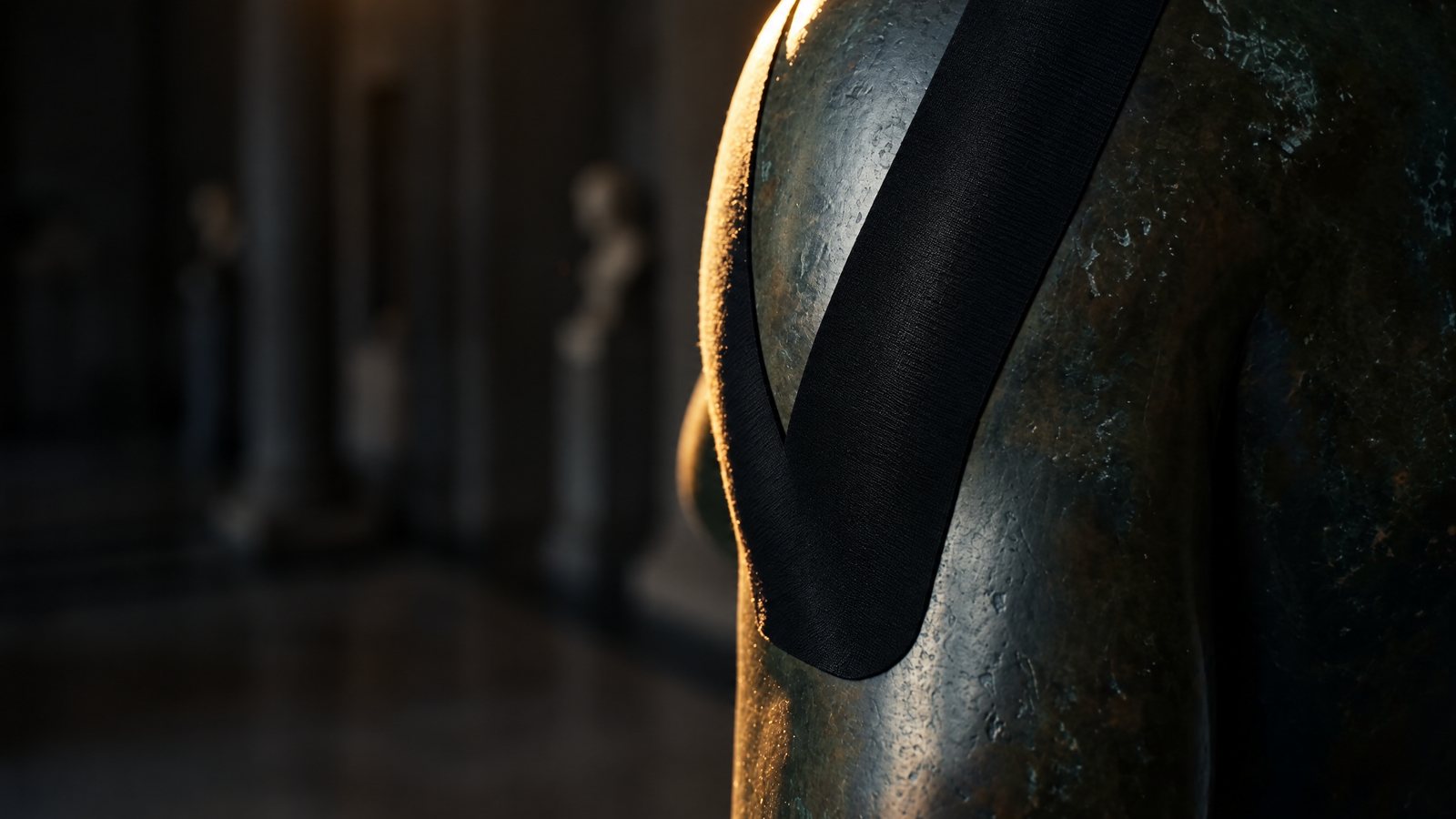
When you pick up kinesiology tape, you rarely think about the fibre. Yet it shapes how a strip feels on the skin and how it looks. Classic tape is made of cotton. Ours is 96% rayon and 4% elastane.5
What rayon is
Rayon, often called viscose, is a fibre made from cellulose. The raw material is usually wood. The cellulose is dissolved and then formed into a thread again through fine nozzles.4 Chemically, rayon is a relative of cotton, since both are made of cellulose. But because rayon is formed as an even thread, it is smoother. That is why it used to be called artificial silk.4
What you see and feel
Rayon has a fine sheen that cotton lacks, and it feels soft. Textile experts describe the fibre as silk-like.1 That is exactly the sheen you see when light runs across a Cura strip.
Rayon absorbs more moisture than cotton. Specialist sources give about 11 to 13% for viscose and about 8.5% for cotton.23 That is a property of the fibre. How long a tape stays on your skin also depends on the adhesive, your skin and how it is applied.
The honest side
Rayon has a weakness too: when wet, the fibre loses some of its strength.1 That is why the rule for any tape after a shower or a swim is: pat dry, do not rub. And that is why our tape contains elastane. It provides the stretch and makes the strip spring back.
What this means for you
- Feel: smooth and soft on the skin.
- Look: a fine sheen instead of matte cotton.
- Care: after water, pat, do not rub.
This text is for general information. It does not replace medical or physiotherapy advice.
Sources
- Swicofil: Viscose, properties
- ASTM D1909: Standard Tables of Commercial Moisture Regains and Commercial Allowances for Textile Fibers
- Ministry of Supply (2019): Viscose, the Regenerated Fiber
- Wikipedia: Rayon
- Cura Athletics: product information on the packaging
Enquiry
Tell us what you need.
More from the catalogue
The ends without tension: how to apply a strip properly
Prepare, apply, activate, remove. A guide in four steps and the mistakes that happen most often.
Tape and skin: how to keep it calm
Tape stays on the skin for days. What helps with sensitive skin, why a test patch makes sense and when you should not use tape.

What tape can and cannot do: an honest look at the research
Kinesiology tape has been studied for decades. What large reviews say, and why we do not promise healing.