Catalogue No. 06
A short history of kinesiology tape
A practice in Japan, a shoulder in Beijing: how a strip of elastic fabric became known around the world.
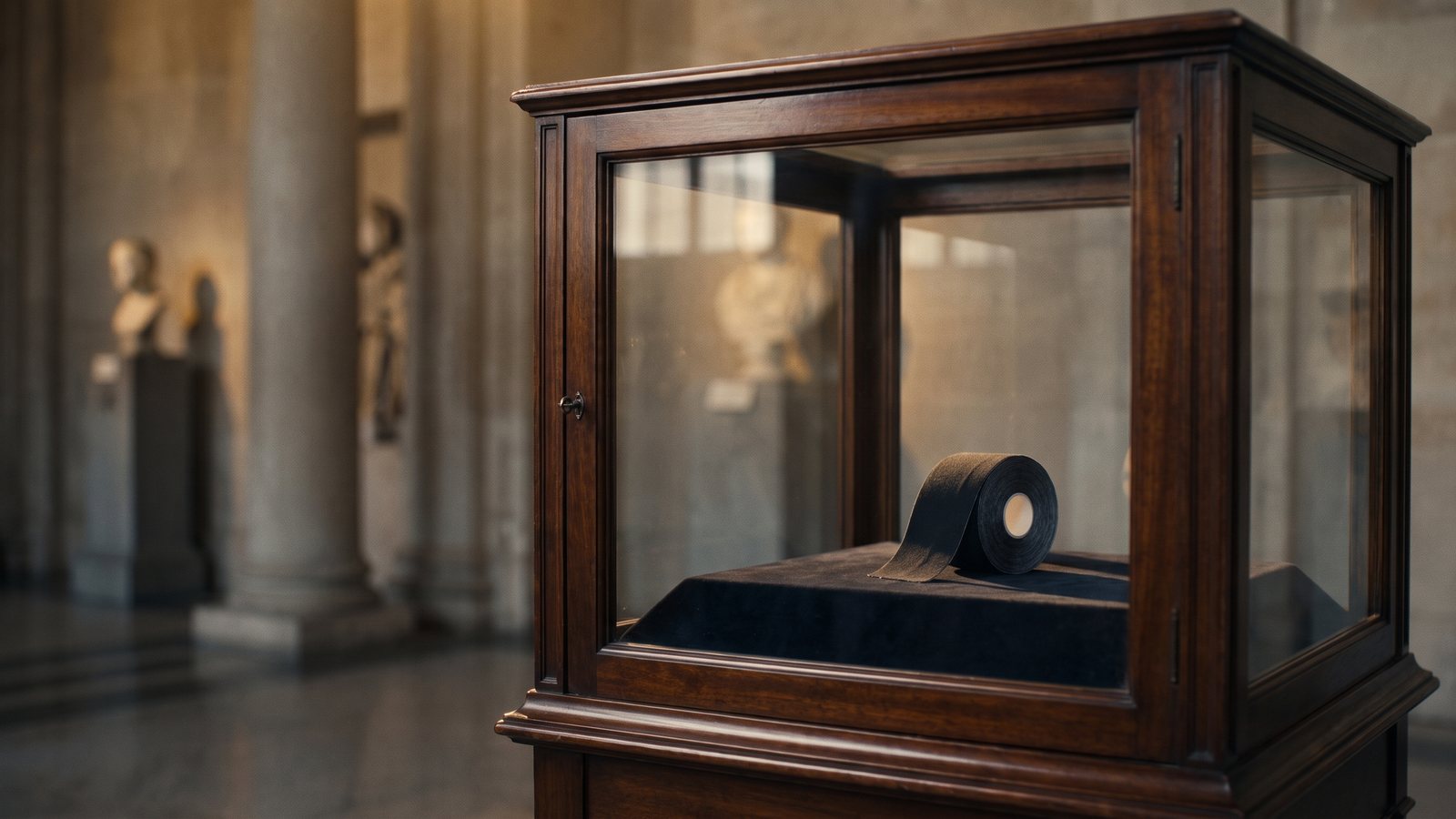
Today you see tape on running tracks, in gyms and at every major championship. It all started in a practice.
The idea
In the early 1970s, the Japanese-American chiropractor Kenzo Kase was looking for a tape that allowed movement. The rigid tapes of his time gave support but restricted movement.13 Together with engineers he developed an elastic tape meant to resemble human skin in thickness and stretch.3
From Japan to the world
In 1979, Kase officially founded his method. In the 1980s the tape came onto the market in Japan, and in the mid-1990s in the USA.2 In 1984 he founded an international association that teaches the method.3 The original tape was an elastic cotton strip with an acrylic adhesive.1
The breakthrough
At the 2008 Olympic Games in Beijing, US beach volleyball player Kerri Walsh wore a striking black strip on her shoulder. The pictures went around the world. According to the manufacturer, its sales grew by 300% afterwards.2 For the 2012 Games in London, the company donated tape to the US Olympic team.2
Famous does not mean proven
Tape is hugely popular. The evidence for its effect is not nearly as strong. What research says today is in our catalogue text What tape can and cannot do.
And today?
Today there are tapes made of cotton, synthetic fibres and rayon. We chose rayon: smooth, fine and with a sheen that cotton does not have.
This text is for general information. It does not replace medical or physiotherapy advice.
Sources
Enquiry
Tell us what you need.
More from the catalogue
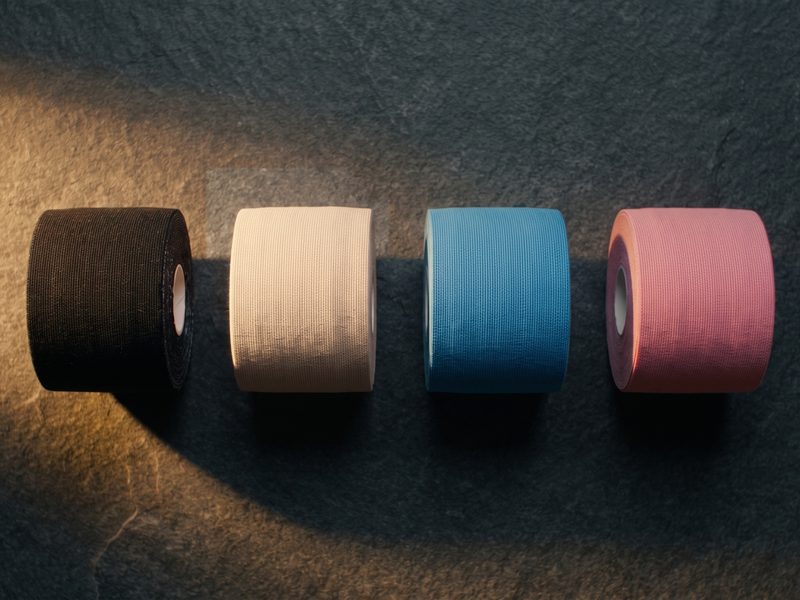
Does the colour have an effect? A myth put to the test
Blue calms, pink activates: you read this a lot. One study tested exactly that.
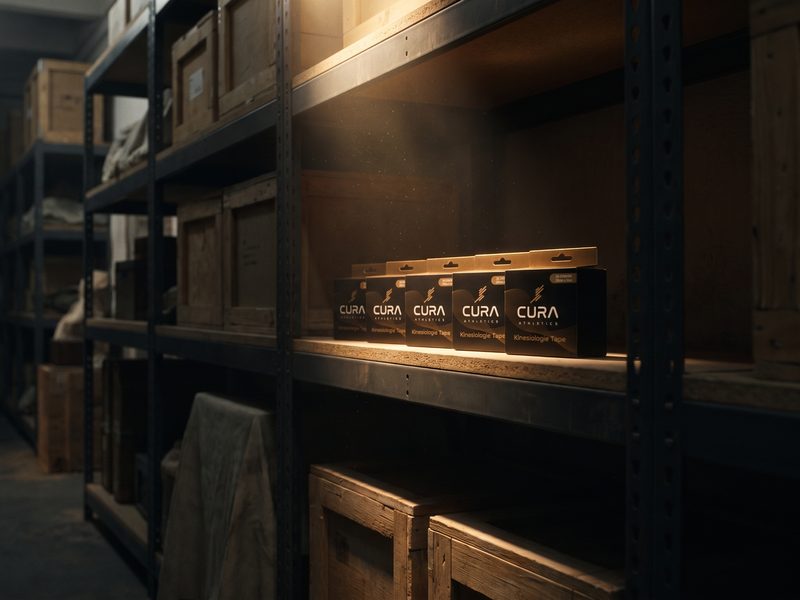
The depot: how to store tape properly
Heat, moisture and sunlight are the enemies of every adhesive. How to keep your tape fresh down to the last strip.

Rayon or cotton: what a tape made of artificial silk does differently
Classic kinesiology tape is made of cotton. Ours is 96% rayon. What this fibre is, what it can do and where its limits are.